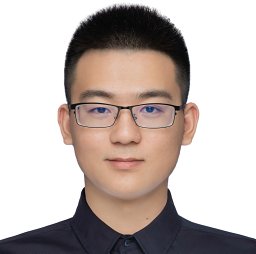
Dr Wanli Ma
Postdoctoral Research Fellow | Practical AI
Computer Vision, Earth Observation, Robotics
University of Cambridge
Cambridge, CB2 1PZ, UK
wm369*at*cam.ac.uk

About
I am a Postdoctoral Research Fellow at the University of Cambridge, where I have been based since January 2025. My research focuses on the intersection of artificial intelligence (AI) and satellite remote sensing for earth observation. In my current role, I work on AI-enabled large-scale disaster damage assessment (such as blasts, floods, and fires) as part of the EPSRC-funded MicroBlast project. Prior to joining Cambridge, I completed my PhD in Computer Science at Cardiff University in 2024. Working within the Visual Computing Group under the supervision of Dr Oktay Karakus (Remote Sensing) and Prof Paul Rosin (Computer Vision, Fellow of the IAPR), my doctoral thesis explored 'Towards Minimal Supervision for Semantic Segmentation of Remote Sensing Imagery.' Previously, I received a Master's degree with Distinction in Image and Video Communication and Signal Processing from the University of Bristol (2021), where my dissertation focused on "Ship Wake Detection in SAR Imagery Using Dual-Tree Complex Wavelet Transform (DT-CWT)".
My research focuses on advanced computer vision, with particular emphasis on "minimal supervision" approaches aimed at reducing the labelling burden in training machine learning models. These include semi-supervised learning, active learning, and multi-modal fusion. I am interested in bridging the gap between theoretical AI and its practical applications in satellite remote sensing imagery. In particular, my work aims to develop solutions for pressing real-world challenges, including rapid large-scale disaster damage assessment (floods, hurricanes, and explosions), marine monitoring, and urban infrastructure detection. Beyond remote sensing, I have a strong interest in applying computer vision to robotics and industrial automation. In this space, I have successfully developed and commercialised automated facilities for the manufacturing sector.
Research Interests
- Computer Vision
- Remote Sensing
- Biomedical Image Computing
- Disaster Damage Assessment
- Marine Debris Detection
- Urban Infrastructure Detection
- Minimal Supervision
- Multi-modal Fusion
- Inverse Problem
Highlights
- Exceptional Talent Endorsed by UKRI under the EPSRC Project MicroBlast, 2025
- Fellow of Outstanding Young Scholars Society UK (OYSS), 2025
- Postdoctoral Affiliate at Clare Hall, University of Cambridge, 2025
- First Prize in China International Aircraft Design Challenge (CADC) Competition, 2016
- Ranked No. 2 Machine Vision for Earth Observation and Environment Monitoring (MVEO) Competition in the British Machine Vision Conference, 2023 (Ranked No. 3 in 2025)
- 2nd Prize in National College Students Photoelectric Design Competition (CPDC), 2017
- Awarded a Competitive Full PhD Scholarship by Cardiff University, 2021
- MSc (Distinction), University of Bristol, 2020
- BSc (First Class Honours), China Jiliang University, 2019
Skills
Programming & GUI / 8 Years
Proficient in Python & C++; Specialist in Qt & MFC GUI development.
Deep Learning
Expertise in PyTorch & TorchGeo for machine learning algorithm development.
GIS Software
Expertise in QGIS and SNAP for satellite data processing and analysis.
Scientific Tools
Expertise in LaTeX for scientific writing, and Git for collaborative research.
Data Analysis & Visualization
Proficient in Pandas, NumPy, Matplotlib, Seaborn, and Plotly for data processing and visualization.
Cloud & DevOps
Experience with Docker, GitHub Actions, and deploying ML models in cloud environments.
Project Management & Collaboration
Skilled in agile methodologies, team collaboration, and problem-solving.
Languages
Fluent in English and Chinese; familiar with scientific and technical writing standards.
Recent News & Activities
- 7 Apr 2026: A paper has been accepted by the Q1 journal Science of Remote Sensing.
- 19 Mar 2026: A paper and an abstract have been accepted by the flagship remote sensing conference, International Geoscience and Remote Sensing Symposium (IGARSS) 2026.
- 13 Mar 2026: A paper has been submitted to the Q1 journal IEEE Transactions on Geoscience and Remote Sensing (TGRS).
- 06 Mar 2026: A paper has been submitted to the Q1 journal IEEE Selected Topics in Applied Earth Observations and Remote Sensing (J-STARS).
- 27 Feb 2026: A paper has been submitted to the flagship computer vision conference, European Conference on Computer Vision (ECCV 2026).
- 23 Feb 2026: An abstract has been accepted by the flagship remote sensing conference, EGU 2026.
- 31 Jan 2026: A paper has been published in the journal IEEE Access.
- 27 Nov 2025: Ranked No.3 among 48 teams from the world in the Machine Vision for Earth Observation (MVEO) contest and delivered our solution presentation at the British Machine Vision Conference (BMVC) in Sheffield.
- 15 Oct 2025: A paper has been published in the Q1 journal Neurocomputing.
- 03-08 Aug 2025: Attended the flagship international remote sensing conference, International Geoscience and Remote Sensing Symposium (IGARSS) 2025 in Brisbane, Australia, delivered two oral presentations, and chaired a poster session.
- 14 July 2025: Invited to deliver a presentation at an Engineering School seminar at the University of Sheffield on building damage assessment using AI and remote sensing.
- 19 June 2025: Being an Affiliated Postdoctoral Member of Clare Hall, University of Cambridge. [Link]
- 27 May 2025: A paper has been published in the Q1 journal IEEE Journal of IEEE Selected Topics in Applied Earth Observations and Remote Sensing (J-STARS). [Link]
- 12 May 2025: Passed PhD viva with minor corrections. Grateful for the invaluable support from Oktay and Paul throughout this journey.
- 24 Apr. 2025: Awarded travel grant from IEEE Geoscience and Remote Sensing Society.
- 21 Apr. 2025: Collaborative project completed — Mw-7.7 Earthquake Impact Assessment in Myanmar and Thailand using Remote Sensing Data, Accessible on Zenodo and MapBox.
- 19 Mar. 2025: A paper has been accepted to the flagship international remote sensing conference, the IEEE International Geoscience and Remote Sensing Symposium (IGARSS 2025)![Link]
Publications
Selected papers
- Core-Set Selection for Data-efficient Land Cover Segmentation. K Nogueira, A Zaytar, W Ma, et al., IEEE Access, 2026
- EHIN: Early-Aware Hierarchical Interaction Network for Weakly-Supervised Referring Image Segmentation. H Li, A Chen, J Liu, W Ma, W Liu, Y Ju, H Liu, W Zhou, Neurocomputing, 2025
- DiverseNet: Decision Diversified Semi-supervised Semantic Segmentation Networks for Remote Sensing Imagery. W Ma, O Karakuş, PL Rosin, JSTARS, 2025
- Integrating Semi-Supervised and Active Learning for Semantic Segmentation. W Ma, O Karakuş, PL Rosin, arXiv preprint, 2025
- Patch-GAN Transfer Learning with Reconstructive Models for Cloud Removal. W Ma, O Karakuş, PL Rosin, IGARSS, 2025
- Knowledge distillation for road detection based on cross-model semi-supervised learning. W Ma, O Karakuş, PL Rosin, IGARSS, 2024
- Land Cover Classification Using Attention-Based Multi-Modal Image Fusion. O Karakuş, W Ma, PL Rosin, Signal and Image Processing for Remote Sensing, 309, 2024
- High-precision density mapping of marine debris and floating plastics via satellite imagery. H Booth, W Ma, O Karakuş, Scientific Reports 13 (1), 6822, 2023
- Confidence guided semi-supervised learning in land cover classification. W Ma, O Karakuş, PL Rosin, IGARSS, 2023
- AMM-FuseNet: Attention-based multi-modal image fusion network for land cover mapping. W Ma, O Karakuş, PL Rosin, Remote Sensing 14 (18), 4458, 2022
- Exploiting the dual-tree complex wavelet transform for ship wake detection in SAR imagery. W Ma, A Achim, O Karakuş, ICASSP, 2021
Oral & Poster Presentations
- Oral Presentation: The International Geoscience and Remote Sensing Symposium (IGARSS), Brisbane, Australia, 03-08 Aug 2025
- Oral Presentation: The International Geoscience and Remote Sensing Symposium (IGARSS), Athens, Greece, 07-12 Jul. 2024
- Oral Presentation: The British Machine Vision Conference (BMVC), Aberdeen, UK, 20-24 Nov. 2023
- Oral Presentation: The International Geoscience and Remote Sensing Symposium (IGARSS), Pasadena, US, 16-21 Jul. 2023
- Poster: The British Machine Vision Association (BMVA) Summer School, Norwich, UK, 11-15 Jul. 2022
- Poster: Vision Researchers Colloquium 2022, Cardiff, UK, 4 Jul. 2022
- Poster: Special Event: The British Machine Vision Association (BMVA) 3 Day Symposium, Manchester, UK, 4-6 Apr. 2022
- Oral Presentation: IEEE International Conference on Acoustics, Speech, and Signal Processing (ICASSP), Toronto, CA (Virtually), 6-11 Jun. 2021
Teaching and Supervision
- Postgraduate module “Machine Learning”, enrollment: 150+ students(Since 2022)
- Undergraduate module “Data Structures", enrollment: 150+ students (Since 2024)
- Summer courses “Python Programming” and “Machine Learning and Its Applications” (Since 2025)
- Teaching two courses, each enrolling over 30 undergraduate students annually.
- Python Programming: data type & structures, function, file I/O.
- Machine Learning and Its Applications: focus on practical and theoretical aspects of machine learning, including supervised/unsupervised learning, neural networks, and model evaluation.
- Machine Learning and Its Applications: guided students through a series of hands-on projects applying AI techniques to detect and analyse urban buildings from remote sensing imagery.
- Diya Thomas, postgraduate at the University of Cambridge. Vision Foundation Models for Disaster Damage Assessment. (2026)
- Ningxin He, undergraduate at the National University of Singapore. Machine Learning Approaches for Earthquake-induced Building Damage Assessment. (2025)
- Xiaoyu Zhang, undergraduate at the University of Cambridge. Reinforcement Learning based Control for Robotic Hoisting in Construction Environments (2025)
- Henry Booth, postgraduate at Cardiff University. Marine Debris Detection Using Deep Learning Networks. Now at the Met Office. (2023)
- Naga Padala, postgraduate at Cardiff University. Integrating PCA, HSV, and Raw Remote Sensing Data via Deep Learning for Land Cover Classification. (2022)
Teaching
I have over two years of teaching experience in the computer science discipline, includingSupervision
Collaboration
- University of Sheffield (2025 – present): Collaborating on blast-loading-informed building damage assessment, with the Sheffield team providing blast-loading simulations for the 2020 Beirut explosion area.
- Chinese Academy of Sciences (2025 - present): Co-developed landslide detection methods based on computer vision and satellite remote sensing imagery.
- Cardiff University (2025 - present):
- Knowledge distillation from various foundation models for semantic segmentation of remote sensing imagery, with regular meetings to discuss technological developments.
- Robot operation and hoisting: collaborating with Cardiff, which provides a simulation environment for soft-object manipulation, while we develop object state prediction and reinforcement learning–based control algorithms.
- AI for Good Lab – Microsoft Research (2023-2024): A collaboration focused on geospatial analytics, applying AI to extract actionable insights and structured information from spatial data, including satellite and aerial imagery. Specifically, we explored automated methods for selecting the most informative coresets from large-scale datasets for land cover mapping to reduce the workload for labelling.
- The German Aerospace Centre (DLR) (2023-2026):
- Collaborated on coreset selection, with DLR providing large-scale satellite datasets for label cover mapping.
- Collaborated on AI for physics-informed building damage assessment, with DLR providing building damage data for the 2020 Beirut Explosion.
Academic Services
- Reviewer for artificial intelligence journals: IEEE Transactions on Image Processing (T-IP), IEEE Transactions on Neural Networks and Learning Systems (T-NNLS), IEEE Transactions on Circuits and Systems for Video Technology (T-CSVT), Neurocomputing, Digital Signal Processing (DSP).
- Reviewer for remote sensing journals: IEEE Journal of Selected Topics in Applied Earth Observations and Remote Sensing (J-STARS), International Journal of Applied Earth Observation and Geoinformation (JAG). GIScience & Remote Sensing (GRS), Remote Sensing (RS), Scientific Reports (SR).
- Session Chair: "Remote Sensing Image Reconstruction, Processing, and Enhancement" in IEEE International Geoscience and Remote Sensing Symposium (IGARSS) 2025.